I hold my hands up to the Lekwungen speaking people, the Songhees and Esquimalt Nations, and recognize with respect their homelands where I have the honour of living and working.

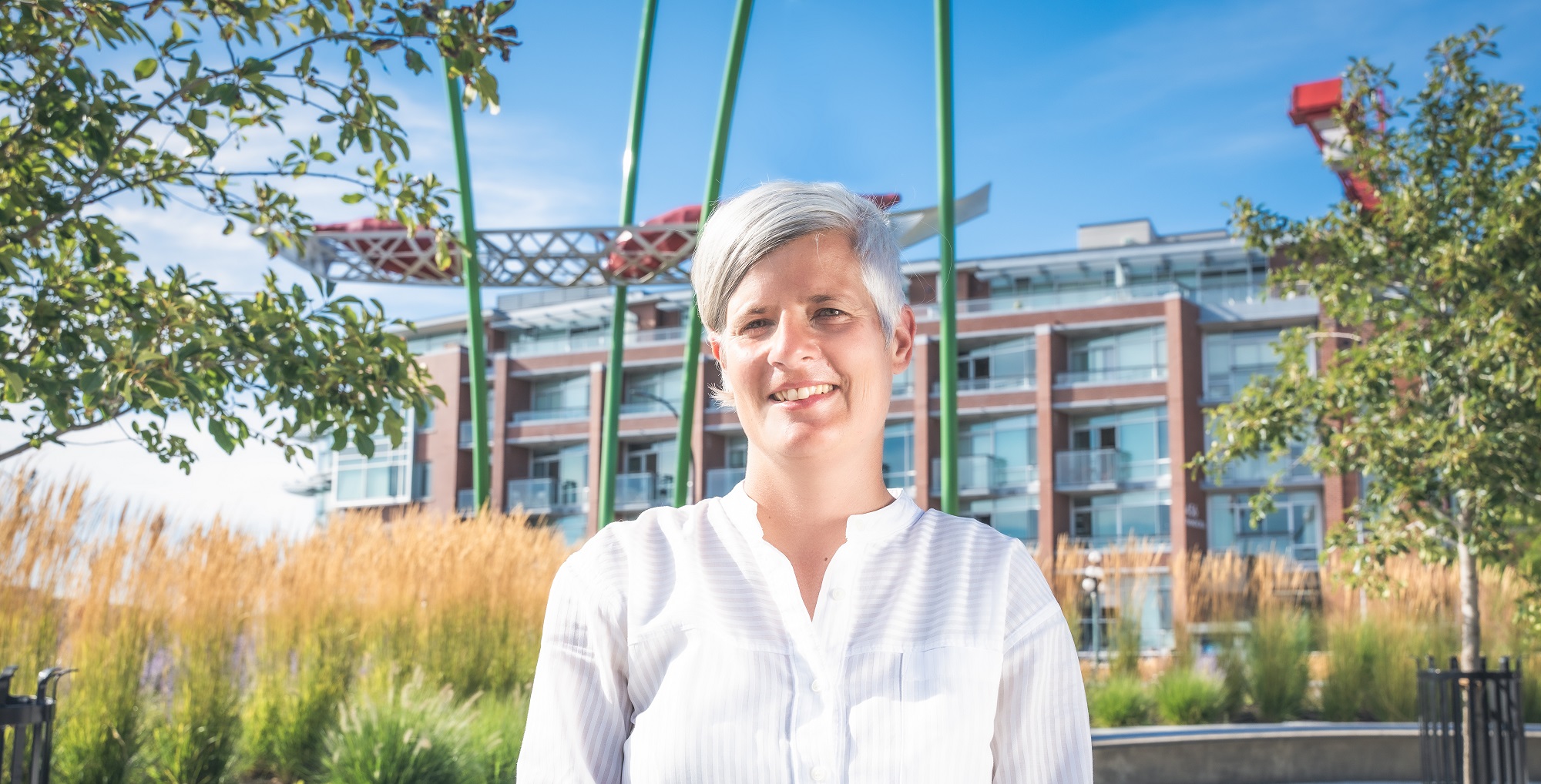
Hi, I’m Lisa Helps!
I’m currently working as Executive Lead, Project Acceleration at BC Housing, where I’m responsible for leading the implementation of the DASH (Digitally Accelerated Standardized Housing) Initiative. Prior to this, as Executive Lead BC Builds Project Origination, I co-led the development and implementation of BC Builds, a housing funding, financing and acceleration program that uses public land, low-cost financing, and other innovative tools to get more housing built more quickly for working people in B.C. Previously, I was Housing Solutions Advisor in the Premier’s Office where I helped to design, develop, and secure funding and financing for BC Builds. Prior to my involvement with BC Builds, I was the two-term Mayor of Victoria B.C.
I also currently have the pleasure of being appointed as a Canadian Urban Leader at the University of Toronto School of Cities where I’m facilitating research on Indigenous-led pathways out of homelessness to housing, healing and home. I’m also teaching Leading Urban Change at the University of Toronto School of Cities. I’m currently chair of the board of the Fernwood Community and Arts Association which runs the Little Fernwood Building, a neighbourhood-scale arts, culture and performance venue and community gathering space.
To learn more you can connect with me on LinkedIn.
Transformative work
“The future can’t be predicted, but it can be envisioned and brought lovingly into being.”
– Donella Meadows, Thinking in Systems, 2009.
I like to do transformative work with cities and communities on housing, climate change, reconciliation and low-carbon prosperity and inclusive economies in order to create empowered, resilient cities and communities.
I like to work in spaces where big ideas can turn into reality, and inspire people to come together, find a common purpose, and take action on complex problems. I’m keen to work with private, public, First Nations, non-profit organizations or faith groups – anyone working to create strong, resilient cities and communities for the future.
I’m focusing my efforts on helping cities and communities with housing, climate change, reconciliation and low-carbon prosperity and inclusive economies because I’ve seen firsthand in Victoria, and from the connections I’ve made nationally and globally, that addressing these key issues as overlapping and related will create empowerment and resilience for cities and communities and set them up well for the dynamic and uncertain future that we are all facing.
Dialogue and generosity as pathways to change
While I learned a lot over eight years as mayor of the City of Victoria, BC, one key insight continues to shape my approach to leadership beyond that very public, high-profile role. During my time as mayor I saw first hand that as a species, we are losing the ability to talk with each other about the big issues that matter – the housing crisis, climate change, reconciliation, economic disparity, racism – especially when we disagree.
We are either “for” something or “against” something, and we amplify our positions easily in social media echo chambers. I witnessed the degradation of public discourse locally and globally during my time in office, and saw how social media leads to short-term decision making. I see this continuing and I worry that we’re losing the ability to think and act together to resolve challenges. I’m convinced that without a different approach to problem solving, we won’t be able to take the necessary action on the pressing challenges facing us.
In his book, Dialogue and the Art of Thinking Together, William Isaacs provides some inspiration that has guided me over the past few years and is shaping the work I’m currently doing on housing and project acceleration.
Isaacs says that there are two habits that pervade human consciousness, “Losing respect for and so rejecting what is uncomfortable and unfamiliar, and becoming fixated on one’s own certainties.” As a way to break these habits, we need to be mindful of, “The ways we think and feel – the levels of internal freedom we allow ourselves, the inclusiveness we are able to sustain, the authenticity we are able to muster, the flexibility of perspective we are able to take, and the stability and spaciousness we have in our hearts.”
Whether it was navigating through pandemic-related homelessness that saw 600 people displaced from housing and shelter, or developing Victoria 3.0, the City’s long-term economic plan, or bringing innovative housing ideas to the Council table, inclusiveness of difference, making space for authenticity, and maintaining a stable, spacious and open heart has helped to deliver real action. I’ve continued to take this approach over the past few years in an executive leadership position at BC Housing, and have seen results both in terms of the number of homes quickly delivered through BC Builds, but also in the strong relationships that got the housing built. Visit my portfolio to learn more.
Over the last few years as mayor – and particularly during the pandemic – I also learned that generosity and curiosity are key leadership qualities. When someone walked into my office or called me and was clearly angry, once they had finished speaking and were likely anticipating a defensive response or justification or explanation, I found that the most productive response was to check my defensiveness and to get curious.
When I’d say, “Tell me more about how this is affecting you, how this makes you feel,” I saw over and over again that generosity can be disarming and open up a space for genuine dialogue. And I learned that genuine dialogue makes it more possible to make transformative change.
You can find me via my contact page. I’ll look forward to the conversation!